
 English
 Español
 Pусский
 Français
 日本語
日本語 العربية
 Türk dili
 Indonesia
 中文
中文
PCL Filament
Polycaprolactone (PCL) filament is a versatile thermoplastic material widely used in 3D printing, prototyping, biomedical research, and educational applications. It is valued for its low melting point, easy processability, and excellent layer adhesion, making it suitable for users who need a material that prints smoothly and reliably. Compared with many other engineering polymers, PCL offers a gentler printing range, which reduces the risk of warping, clogging, and excessive thermal stress during fabrication.One of the most notable characteristics of PCL filament is its low melting temperature, typically around 60°C. This allows it to be melted and shaped with relatively low energy input, which is beneficial for laboratory demonstrations, low-temperature modeling, and specialized printing systems. Because of this property, PCL is often used in applications where heat-sensitive additives, biological materials, or delicate substrates must be preserved. Its softening behavior also makes it easy to form, cut, and modify after printing.PCL filament is especially popular in biomedical and research settings. It is biodegradable and biocompatible, which makes it useful for experimental scaffolds, tissue engineering studies, drug delivery research, and temporary medical models. Researchers appreciate that the material can be processed into complex geometries while maintaining structural integrity. Its slow degradation profile is another advantage in controlled-environment studies, where gradual breakdown is preferred over rapid material loss.In addition to scientific uses, PCL filament is suitable for creative and educational projects. Students and makers can use it to learn the fundamentals of additive manufacturing without dealing with the high temperatures required by many other filaments. Its ease of use makes it an attractive option for beginners who want consistent results. The filament generally produces smooth surfaces and clean detail, especially when printing at the proper temperature and speed.PCL also demonstrates good flexibility and impact resistance relative to its low melting point. Printed objects may feel slightly softer and more pliable than those made from rigid polymers, which can be an advantage in certain applications. This flexibility supports design experimentation in model making, art projects, and low-stress functional parts. However, because of its softer nature, it may not be ideal for high-load mechanical components or environments with elevated temperatures.Storage and handling of PCL filament are also straightforward. Like many thermoplastics, it should be kept dry and protected from dust to maintain print quality. When stored properly, it remains stable and ready for use over time. Its compatibility with a range of printing setups further increases its appeal for labs, schools, and hobbyists.Overall, PCL filament combines ease of printing, biodegradability, and low-temperature processing in a single material. These qualities make it a practical choice for users seeking a reliable filament for research, education, prototyping, and specialized manufacturing tasks.
Produkt
Kategorie:
-
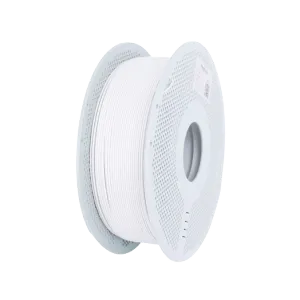
PCL Filament
Ihre Klassifizierung: EngineeringAnsichten: 11Nummer: 1.75mmVeröffentlichungszeit: 2026-10-09 19:11:25
Nachrichten
Kategorie:
Keine Suchergebnisse!
Fall
Kategorie:
Keine Suchergebnisse!
Video
Kategorie:
Keine Suchergebnisse!
Herunterladen
Kategorie:
Keine Suchergebnisse!
Rekrutierung
Kategorie:
Keine Suchergebnisse!
Empfohlene Produkte
Keine Suchergebnisse!



 Telefon