
 English
 Español
 Pусский
 Français
 日本語
日本語 العربية
 Türk dili
 Indonesia
 中文
中文
FDM printer
An FDM printer, or Fused Deposition Modeling printer, is a type of 3D printing machine widely used in education, engineering, product development, and home manufacturing. It works by heating a thermoplastic filament and extruding it through a nozzle in thin layers to build a three-dimensional object from the bottom up. Because of its relatively simple structure, affordable cost, and ease of operation, it has become one of the most popular 3D printing technologies in the world.The basic working principle of an FDM printer is straightforward. A spool of filament is fed into a heated extruder, where the material melts and is deposited precisely onto a build platform. The nozzle moves according to a digital design file, tracing each layer of the object. After one layer is completed, the platform lowers slightly or the nozzle rises, and the next layer is printed on top of the previous one. Over time, these layers form a complete solid model. Common filament materials include PLA, ABS, PETG, TPU, and nylon, each offering different levels of strength, flexibility, heat resistance, and ease of printing.One of the main advantages of an FDM printer is its versatility. It can create prototypes, functional parts, replacement components, educational models, and artistic designs. Users can quickly test ideas, modify designs, and produce physical objects without the need for expensive molds or complex manufacturing processes. This makes FDM technology especially valuable for small businesses, hobbyists, designers, and students. It also supports a wide range of object sizes, from tiny detailed parts to larger structural models, depending on the machine’s build volume.Another important benefit is accessibility. Compared with many other 3D printing methods, FDM printers are generally easier to maintain and operate. The materials are widely available, and the printing process does not usually require highly specialized training. Many printers include features such as automatic bed leveling, filament detection, heated beds, and touchscreen controls, which improve user experience and printing reliability. Open-source software and slicer programs also allow users to prepare models with customizable settings such as layer height, print speed, infill density, and support structures.However, FDM printing also has some limitations. The surface finish may show visible layer lines, and very fine details can be harder to achieve compared with other printing technologies. Printing speed can be slow for large or highly detailed objects, and some materials may warp or require careful temperature control. Despite these challenges, continuous improvements in printer design, software, and filament quality have made FDM printers increasingly capable and dependable.Overall, an FDM printer is a practical and powerful tool for turning digital designs into physical objects. Its balance of affordability, flexibility, and ease of use has made it an essential technology in modern prototyping and personal fabrication.
Produkt
Kategorie:
-
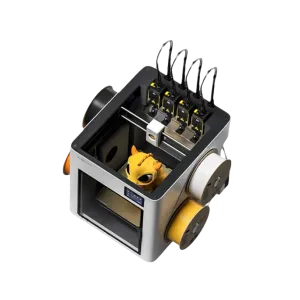
3D Printer
Ihre Klassifizierung: AccessoriesAnsichten: 39Nummer:Veröffentlichungszeit: 2026-10-09 19:07:52
Nachrichten
Kategorie:
Keine Suchergebnisse!
Fall
Kategorie:
Keine Suchergebnisse!
Video
Kategorie:
Keine Suchergebnisse!
Herunterladen
Kategorie:
Keine Suchergebnisse!
Rekrutierung
Kategorie:
Keine Suchergebnisse!
Empfohlene Produkte
Keine Suchergebnisse!



 Telefon